 Nami
NamiFree · pulp
AI slop channels
278 all-AI channels among the world's top, 63bn views, ~$117M a year.[S18] Cheap and forgettable, and since July 2025 YouTube can demonetize "mass-produced" content.[S19]
The HBO
of the feed.
Prestige serialized drama for adults. Written by people, drawn by machines, free to watch on YouTube, TikTok and Instagram.
Pocket FM made $500M a year from serial fiction behind a paywall.
We put better stories where the audience already is.
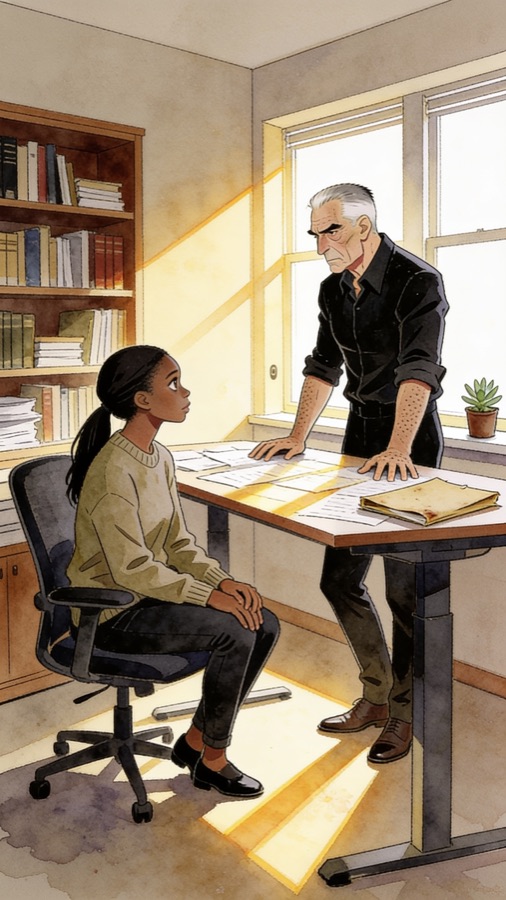

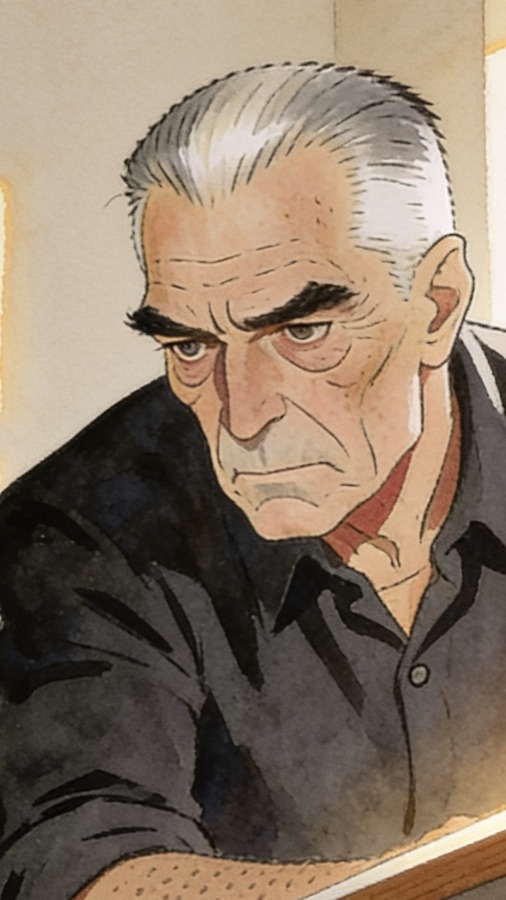
"You found it. Which means someone will come looking for you."
An Indian audio-serial app became a half-billion-dollar business by selling episodic romance and fantasy to American adults, one coin at a time. Its stories are written fast and voiced by AI. Its audience listens more than two hours a day.
Up from $250M a year earlier. $415M paid by listeners, $85M ads.[S1]
Growing ~70% a year. The money is American adults.[S1]
From 44% two years earlier. Serial habits compound.[S1]
Saving Nora: 1,884 episodes, $18M gross.[S1, S3]
Cost per hour of audio down from ~$1,000 to ~$50.[S1, S4]
Profitable, free-cash-flow positive since March 2026.[S1, S2, S5]
Pocket FM annualised run rate
US$ millions, company-reported [S1, S2, S3]
Pocket FM spends heavily to buy every listener into a closed app, then sells them coins. It never built stories people would share, or a brand anyone is proud to watch. That is the opening.
Microdrama, audio serials and webtoons all sell the same product to the same adults: a cliffhanger, then a charge. Almost none of it is good. Almost all of it is locked inside an app you have to be bought into.
Paid serial fiction · reported figures · marks belong to their owners
Bigger than China's box office. 830M viewers.[S7]
Q1 2026 ~$750M from 850M downloads (+140%).[S8]
First profit. Marketing 55% of revenue.[S9]
157M MAU, 7.5M paying (4.8%).[S10]
Kuku filed to IPO at up to ~$1.8bn.[S1, S11]
Where adults actually watch · reported figures
#1 distributor on American televisions, ahead of Disney (10%).[S12]
55% of long-form ad revenue goes to the channel.[S13]
Plus TikTok and Reels: the discovery layer is free.[S14]
48% of advertisers call creators a "must buy".[S15]
US, 2020–2023. Audience 58% male, 39% Gen Z.[S16]
We don't quote a single TAM: estimates for microdrama alone span $3bn to $14bn depending on who counts ads and China.[S17] The figures above are the money already spent on the product and in the places we distribute. Market tables in A2.
Nami
Writers' room quality, released free in the feed, paid for by ad share, memberships and brand partners. Episodes at under 1% of TV animation cost.
AI slop channels
278 all-AI channels among the world's top, 63bn views, ~$117M a year.[S18] Cheap and forgettable, and since July 2025 YouTube can demonetize "mass-produced" content.[S19]
HBO · Prime · Netflix
Arcane: $250M for 18 episodes, ~$350K a minute.[S20] Invincible, Hazbin Hotel. A handful of shows a year, behind a subscription.
Pocket FM · ReelShort · DramaBox
Werewolf CEOs, secret billionaires, coins after episode five. Huge revenue, rented audience: 55%+ of revenue re-spent to buy the next viewer.[S9]
Glitch Productions put The Amazing Digital Circus on YouTube for free: 350M+ views on the pilot, ~1.2bn on the series, and a finale film that opened to $36.6M at the box office in June 2026. Murder Drones cost up to $300K an episode, paid for by YouTube revenue and merch.[S21, S22]
Vivienne Medrano built Hazbin Hotel and Helluva Boss on YouTube (11M subscribers, 1.9bn views) before Prime Video and A24 bought the show. It became Prime's biggest global debut for a new animated title.[S23] Both studios release a few episodes a year. Nami can release every week.
Nami is a slate of serialized shows for adults, each a season of 8–20 minute episodes, released weekly under one brand. Every episode stands on its own; the season builds toward something. The public episodes are the whole show. Members get more of the world, not the missing ending.
One pre-written ~30-episode story, written in full before a frame is drawn. The show people talk about, and the reason to subscribe to the network rather than one video.
Psychological thriller, dark romance and romantasy, crime, horror, adult sci-fi. The same genres Pocket FM and ReelShort monetise, written to a far higher standard.
A parallel storyline, another character's side, a separate case. Weekly, members-only, substantive: never deleted scenes or production diaries.
Each episode cut into 6–10 vertical scenes of 30 seconds to 3 minutes for TikTok, Reels and Shorts. The clip is the ad; the full episode is the product.
Every slot runs a screening funnel already built into the studio: a dozen directions per slot, a blinded in-row tournament, full pilots for the survivors, then a side-by-side comparison. Concepts are judged as mass-appeal serial entertainment against five editorial criteria, not by prestige taste.
The Proof — a mathematician, a proof that should not exist, and the student who found it. A 14:38 pilot live on nami.fm, painted in watercolour, cut from a book-length script. Seventeen looks verified on real scenes; every film picks one.
Frames below are from The Proof, straight out of the pipeline. Each show picks a route: illustrated stills with a moving camera and selective motion, or full animation with lip-synced performance.
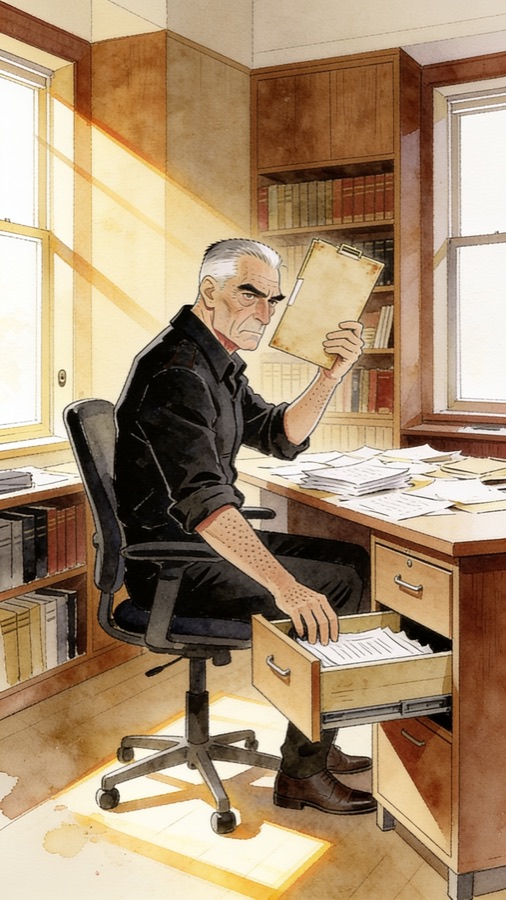
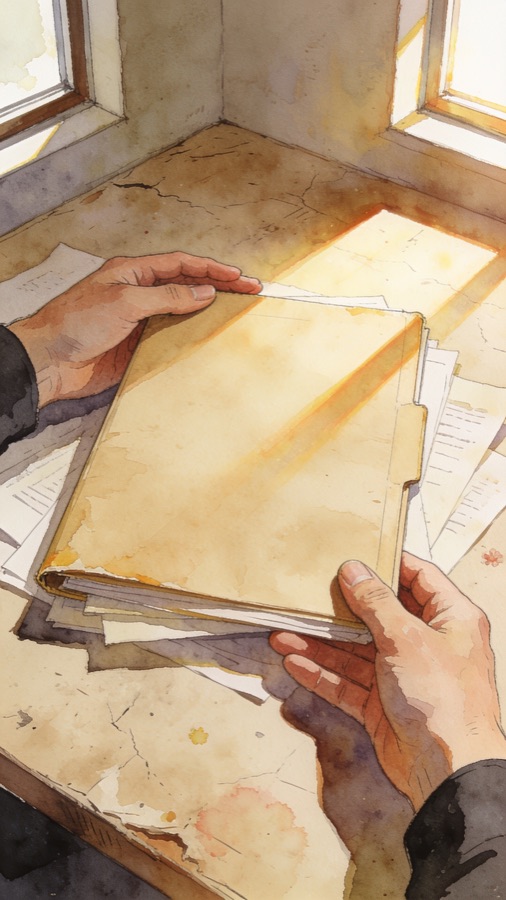
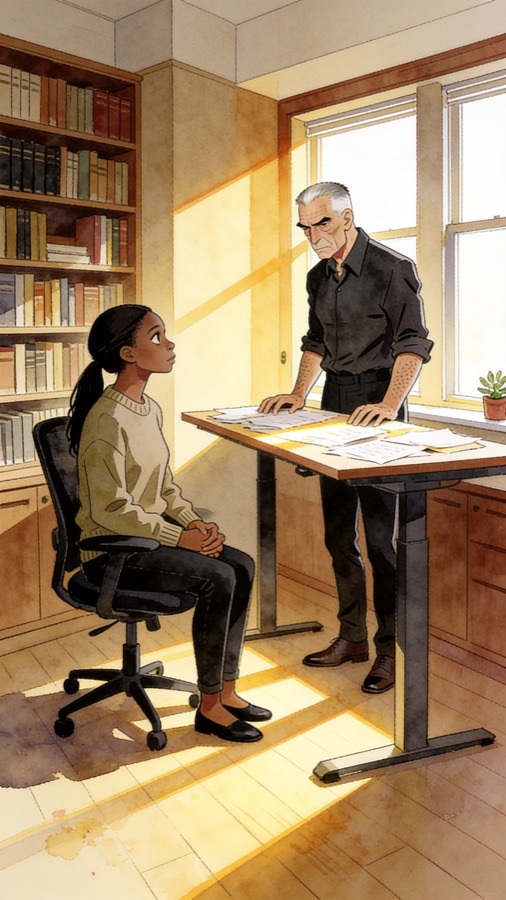
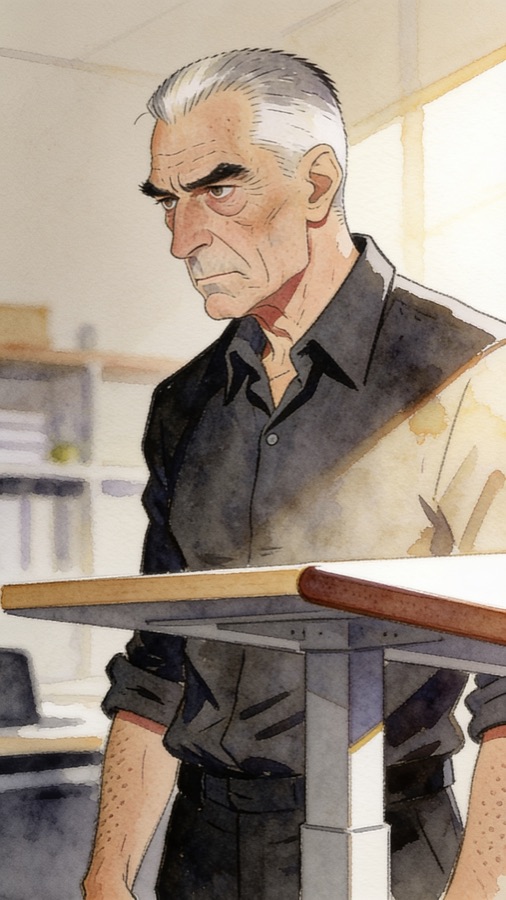
The Proof, sequence 1 · twelve beats, twelve usable, one spec correction · watercolour look.
Plate-consistent stills, a directed camera push on every hold, selective motion on key beats. Reads like a graphic novel that breathes.
Machine cost ≈ $1.7–2.7 per finished minute, measured on a 12.6-minute episode.
Cast plates and room memory drive a video model; each side of a dialogue gets its own coverage and the edit cuts between them. Our own voice lines drive the lip-sync.
Machine cost ≈ $10–16 per finished minute at mobile resolution, measured on a bench scene.
Cost per finished minute
US$, log scale. Third-party figures are reported or estimated budgets divided by runtime; Nami figures are provider-billed.[S20, S22, S24]
The machines are no longer the cost. The writers are, and that is where we spend.
A human showrunner and staff writers per show, paid properly. The engine drafts, covers and checks continuity; people decide what the story is.
Concepts and openings compete blind against each other, scored on five editorial criteria, promise against delivery. Nothing is discarded; everything is inventoried.
YouTube's July 2025 policy demonetizes "inauthentic", mass-produced content, AI or not.[S19] A named writers' room and a distinct IP are the difference between a network and a slop farm.
Pocket FM's CEO: "great IPs that last 100 years… need humans." We agree. We just don't make them pay for the pictures.[S1]
Nami makes stories for grown-ups: moral darkness, violence with weight, desire, betrayal, language. It does not make explicit sexual content. None of the three platforms allows it, and none of them would pay for it.
Nobody has to be bought into a closed app. The episode lives where adults already watch; the clips travel on the feeds that already recommend drama; checkout is the platform's own Join button.
8–20 minutes, rated, finished once.
30 s to 3 min scenes, cliffhanger last.
The feeds do the reach; bought views give every launch its first audience.
On YouTube, on the TV, in the evening.
Members-only companion series, native checkout.
Full free episodes, the members' companion series, TV-screen viewing. The only place adults routinely watch 10–30 minute fiction.
Scenes and cliffhangers that send people to the full episode. Later: TikTok-native subscriber episodes, which can pay better than YouTube.
The strongest Reels, character and world content. Subscriber-only material only once a real fan base exists there.
Shares from YouTube, TikTok and Instagram policy pages.[S13, S26, S27, S28] The TikTok bonus requires 10K followers, 100K monthly views and three subscriber-only videos a month; the base case uses 70%.
Buy YouTube views against buying TikTok views. Same story, same offer, separate paid-member CAC.
TikTok may win: attention is cheaper there and checkout stays native. We measure incremental paying members per 1,000 billed views, never free subscribers. Full design in A4.
Every line is paid out by a platform or a brand we already know how to invoice. No coins, no app-store 30%, no paid-unlock ending.
YouTube pays channels 55% of long-form ad revenue; long episodes watched on a TV carry mid-rolls. Shorts, TikTok and Reels pay little, so we treat them as discovery and count them conservatively.
$6.99 a month on YouTube leaves ~$4.80 after the 70% share and a 2% refund reserve. The offer is a weekly members-only companion series plus the back catalogue. Precedents: Dropout passed 1M subscribers at $6.99; the Try Guys' $4.99 membership reached 20% of revenue in three months.[S29, S30]
Integrations priced per thousand views ($20–35 is standard on YouTube), and product placement drawn into the world, which is a line in the shot spec rather than a reshoot.[S31] On top, licensing and platform deals: Glitch signed non-exclusive deals with Netflix and Amazon; Vivziepop's show moved to Prime.[S21, S23]
One season, middle scenario: where the revenue comes from
Model · 10 episodes · lifetime long-form views · revenue
The unit is a season: ten episodes of ~15 minutes, written by a paid room, voiced by actors, drawn by the engine, plus a paid-media budget that buys every launch its first viewers, some of whom subscribe. Pick a scenario; every figure on this page and in A3 comes from one assumptions object.
Lifetime, 24 months
10 × all-in episode + launch
revenue ÷ cost
organic long-form views per episode
Bought viewers, per season · paid views on YouTube and TikTok
billed views at
follow-on views after the ad
CAC incl. 10% creative
revenue from bought viewers ÷ media
Spend follows the return: below 1× we cut media back to launch-only; at 2× and a CAC under ~$7 (the expansion case) paid views become the growth engine. Acquisition math in A4.
| Per season |
|---|
| Network | Year 1 | Year 2 | Year 3 |
|---|
The slate averages ~400K organic long-form views an episode over two years, misses included, and bought views pay back at least 1×. Independent adult animation on YouTube routinely does multiples of that; AI-made drama at this quality has no public benchmark yet.
Hits. Revenue per view doubles in the expansion case because members and sponsors pay more for a show people love. One Amazing Digital Circus pays for a hundred misses.
Gates. In the conservative case we stop commissioning after the first four seasons. Year-one loss is capped near , inside the round.
Model claims are arithmetic on stated assumptions, not forecasts. No Nami audience, membership or sponsorship data exists yet. Full assumptions, editable inputs, sensitivity and the membership acquisition test in A3 and A4.
| Who | Format | Where it lives | How it's paid for | Writing |
|---|---|---|---|---|
| Pocket Saga (Pocket FM) | AI-animated serials | Own app, US | Coins, ~$15M run rate[S6] | Volume |
| ReelShort · DramaBox | Live-action vertical microdrama | Own app | Coins, weekly passes; 55% to ads[S9] | Tropes |
| TikTok PineDrama | Licensed microdrama | Standalone app | $82M paid to partners, H1 2026[S32] | Tropes |
| Toonstar | AI-assisted comedy animation | YouTube | Ads, brand, HarperCollins slate[S33] | Kids / comedy |
| Promise · Dashverse | AI studio · AI microdrama | Studios, own app | Venture, licensing, coins[S34] | Varies |
| Glitch · Vivziepop | Hand-made adult animation | YouTube → streamers | Ads, merch, streamer deals[S21, S23] | Prestige |
| Nami | Prestige serials, illustrated or animated | YouTube · TikTok · Instagram | Ad share, memberships, partnerships | Prestige |
Glitch and Vivziepop prove the audience and the business model. They release a few episodes a year at up to $300K each. Nami's bet is that it can release every week at under $10K an episode without losing what makes them watchable. That is a bet, not a finding.
Markus
Maier
Founder
Built the Nami engine himself: from book to cast bible, shot spec, stills, animation, voice and edit, with every call carrying its billed cost. Sold his last venture-backed consumer company.
Content. Writers' rooms, voice casts and production for ~14 seasons across the first 18 months.
Team. Head of writing, animation director, two engineers on the pipeline and clip exporter.
Distribution. Paid view tests on YouTube and TikTok, creative, community.
Legal, policy, G&A. Rights, platform classification, contingency.
Four seasons across three shows, weekly, with bought views on every launch. Reach YouTube Partner and membership eligibility.
Gate: one show averages ≥ 500K views an episode in its first 90 days.
Companion series live. $3–5K staged paid-view tests on YouTube vs TikTok.
Gate: paid-member CAC ≤ $7 with two renewals observed.
Ten seasons a year, first brand partners, first licensing conversation.
Gate: a season pays back its cost inside 12 months.
The round funds the middle case to its deepest cash point () with room to spare. In the conservative case the Stage 1 gate stops commissioning, and most of the round is still in the bank.
Better stories than the paywalled apps, in the places adults already watch.
What exists, the market in full, the business case with every assumption editable, the membership acquisition test, platform gates, production costs, risks and 34 sources. Collapsed on purpose.
Pocket FM, by period
| Period | Revenue | What it shows | Source |
|---|---|---|---|
| FY22 | ₹17.5 Cr | Loss before tax ₹171.6 Cr. Marketing ~7× revenue. | S2 |
| FY23 | ₹131 Cr | +647%. Marketing cut 45%, loss down to ₹75.7 Cr. | S2 |
| End 2023 | ~$150M ARR | US takes over. Insta Millionaire (1,440 eps) $15M gross; US listeners 135 min/day. | S3 |
| FY24 | ₹1,052 Cr | Net loss ~₹165 Cr. Series D $103M at ~$750M (Lightspeed, StepStone). | S5 |
| FY25 | ₹1,768 Cr | +68%. ~200 contract writers cut in 2024 as AI took over drafting. | S5 |
| Mar 2026 | $430M ARR | Free-cash-flow positive at ~5% EBITDA. | S5 |
| Sep 2026 | $500M run rate | US 70%; 76% 12-month revenue retention; 93% AI catalogue; raising $100–120M at ~$2bn. | S1 |
Paying-user share (6–8%), US ARPPU (~$12) and Tier-1 CAC (~$7) circulate widely but trace to secondary estimates, not filings; we do not rely on them. Pocket Toons (AI comics, Feb 2025, "$100M ARR by 2026" target) was folded into Pocket Saga and the target looks missed.[S4, S6]
Serial fiction and adult animation, reference class
| Company / market | Figure | Type | Source |
|---|---|---|---|
| Microdrama, China | ¥50.5bn (2024, CTDPIA); $9.4bn 2025 (MPA), above box office; ~50K AI titles added to Douyin in one month | Analyst | S7 |
| Microdrama, ex-China | $2.8bn IAP 2025 (+116%); Q1 2026 ~$750M (+20%) on 850M downloads (+140%): revenue per user falling | Sensor Tower | S8 |
| Forecasts | MPA ex-China $3.6bn 2026 → $9.5bn 2031; US $1.5bn → $3.7bn. Deloitte $7.8bn 2026. Omdia ~$14bn global | Analyst · range ~3× | S17 |
| ReelShort | $97M (2023) → $400M → $785M → ~$1.05bn 2026E; $40M net profit; marketing 55%; NA 59% | Analyst / filing | S9 |
| DramaBox | $323M 2024, $10M net profit; ~50M MAU | Third party | S9 |
| Kuku FM | FY26 revenue >₹1,400 Cr, mostly Kuku TV microdrama; IPO filed at up to ~$1.8bn | Filing / press | S11 |
| Webtoon Entertainment | FY2025 $1.38bn, net loss $373M; Q2 2026 MAU 156.9M, 7.5M paying | Filing | S10 |
| Kakao (Tapas, Radish) | Paid ~$950M in 2021; shut Radish end-2025 and Tapas Sep 2026. Buying an app audience is not owning one | Press | S35 |
| Glitch Productions | TADC pilot 350M+ views; finale film $36.6M worldwide; Murder Drones up to $300K/episode | Press | S21, S22 |
| Vivziepop | 11.1M subscribers, 1.9bn views; Hazbin on Prime with A24, biggest global animated debut | Press | S23 |
| Dropout · Try Guys · Critical Role | Dropout 1M+ subs at $6.99, +31% 2024→25; 2nd Try 20% of revenue in 3 months; Beacon $5.99 | Press / company | S29, S30 |
| Audience | YouTube microdrama: women 35–44 are 20.8% of streams vs 11.5% baseline; adult animation 58% male | Third party | S16, S36 |
Change any input; the season, network and sensitivity tables recompute, as do the figures in section 10. Inputs reset when you switch scenario.
Season P&L, all three scenarios
| Line | Cons. | Middle | Exp. |
|---|
Revenue mix per season
All-in cost of one 15-minute episode
| Line | Illustrated | Animated | Basis |
|---|---|---|---|
| Writing: script, room allocation, revisions | $4,000 | $4,000 | Planning figure; paid room, not generated drafts |
| Voice cast, 4–6 actors, direction | $1,800 | $1,800 | Planning figure; AI voice is a cheaper fallback, not the default |
| Direction, edit, QC, retakes (labour) | $2,000 | $3,200 | Planning figure; animation needs more review |
| Music, sound design, mix | $800 | $800 | Planning figure |
| Machine: images, video, lip-sync, judges (×2.5 retries) | $100 | $600 | Measured $/finished minute × 15 × 2.5 |
| Clips, thumbnails, captions, delivery | $600 | $600 | Planning figure |
| Per episode | $9,300 | $11,000 | Model uses $9,500 (slate mostly illustrated) |
| Per finished minute | ~$620 | ~$730 | vs ~$11K TV anime, ~$45–90K US TV animation |
Sensitivity: season contribution by organic views per episode × cost per episode (current scenario's revenue per view and paid media)
The model above assumes organic reach. Could paid views also buy paying members profitably? The answer depends on cold-view-to-paid conversion and renewals, not cheap views.
$6.99 × 70% × 98%
100% → 65% → 45% → … (assumed)
12-month contribution, before content
for 2× value ÷ CAC
One $1,000 cohort at $0.05 per billed view (+10% overhead)
| Scenario | Conversion | Members | CAC | Cohort value | After acquisition | Value ÷ CAC |
|---|---|---|---|---|---|---|
| Weak | 0.10% | 20 | $55.00 | $288 | −$812 | 0.26× |
| Central | 0.30% | 60 | $18.33 | $863 | −$237 | 0.78× |
| Higher | 0.60% | 120 | $9.17 | $1,726 | +$626 | 1.57× |
| Works-to-test ($0.03 views) | 0.50% | 167 | $6.60 | $2,398 | +$1,298 | 2.18× |
Break-even paid conversion (billed views → paying members), $6.99, incl. 10% overhead
| Average paid months | $0.03 / view | $0.05 / view | $0.08 / view |
|---|---|---|---|
| 1 month | 0.69% | 1.15% | 1.84% |
| 2 months | 0.34% | 0.57% | 0.92% |
| 3 months | 0.23% | 0.38% | 0.61% |
| 6 months | 0.11% | 0.19% | 0.31% |
In practice: at three-cent views, acquire about five paying members per 1,000 billed views; at five-cent views, about eight. At $4.99 the break-even conversion rises by ~40%. CPV anchor is $0.05 average across $1.04M of 2023–24 YouTube spend, all B2B SaaS, not entertainment.[S37]
Staged test
| Stage | Budget | What we need to learn | Caveat |
|---|---|---|---|
| 0 · Eligibility | — | YPP and memberships approved, companion series ready. | Ad-bought watch hours and subscribers don't count toward eligibility.[S38] |
| 1 · Organic offer | Existing audience | 10–20 self-paid joins from one flagship and a real premium side story. | Warm demand is not cold CAC. |
| 2 · Screen hooks | $500 | Downstream viewing and any self-paid joins, one market. | Cheap CPV alone means nothing. |
| 3 · Best funnel | $1,500 | 50–100 incremental paying members; all-in CAC. | Attribution is directional; Google's "subscription" goal is a free subscribe. |
| 4 · Renewal & replication | $1,000–3,000 | Two renewals observed; replicate on a second story. Same test on TikTok. | Don't book the unobserved tail. |
Comparables prove people pay for entertainment memberships and that Dropout gets ~10% of subscribers from paid marketing.[S29] None publishes a cold-view → native paying member → renewal cohort for a new fiction channel. That is what the test produces.
| Gate | Status | Implication |
|---|---|---|
| YouTube Partner Programme | Not yet eligible | 500 subscribers, 3 uploads in 90 days, 3,000 watch hours in 12 months (or 3M Shorts views in 90 days). Paid views don't count.[S38] |
| YouTube "inauthentic content" | Standing risk | Mass-produced or repetitive content can be demonetized. Mitigation: named writers, distinct shows, human direction; never templated uploads.[S19] |
| Mature themes on YouTube | To confirm per episode | Advertiser-friendly guidelines reduce ads for violence, sexual themes and strong language; age-restriction removes most ads and discovery. Every episode rated before upload. |
| Explicit sexual content | Excluded | Not permitted on YouTube, TikTok or Instagram, including subscriber-only posts. Out of the plan entirely. |
| TikTok subscriptions | Base case 70% | Bonus to 90% needs 10K followers, 100K monthly views, 3 subscriber-only videos a month. Rules outside US/CA are 50% + 20%.[S26] |
| App-store fees on memberships | Margin risk | Joins made in the iOS/Android apps can carry store fees that cut the effective share toward ~49%. Model uses 70%; sensitivity in A3.[S27] |
| AI disclosure & rights | Process | Synthetic-content labels where required; original characters only; actor consent and contracts for every voice. |
| When | Role | Why |
|---|---|---|
| Month 1 | Head of writing (showrunner, prestige TV credits) | Owns the slate, the room and the editorial bar. The moat is this person. |
| Month 2 | Animation director | Owns the look per show and the call between illustrated and animated. |
| Months 2–4 | Two engineers | Pipeline reliability, clip exporter, release tooling, analytics. |
| Months 3–6 | Staff writers (contract, per season) | Paid per episode; scale with the slate, not with headcount. |
| Month 6 | Partnerships lead | Brand integrations and licensing once view data exists. |
| Risk | What would show it | What we do |
|---|---|---|
| Nobody watches episode two | Episode-to-episode retention below the channel's own average after 4 seasons | Stop commissioning; the Stage 1 gate. Keep the engine, change the slate. |
| AI look reads as cheap | Comment sentiment, blind panel scores, completion vs hand-made benchmarks | Shift budget to the animated route or fewer, stronger shows. |
| Mature themes cut monetization | Limited-ads rate by episode; RPM below $3 | Rate before upload, per-platform cuts, lean on memberships and sponsors. |
| Platform policy shift | Demonetization notices; changes to AI or mass-production rules | Three platforms, authored shows, a direct list of members over time. |
| Members don't renew | Second-bill rate below 50% | Rework the companion offer before any paid acquisition. |
| Incumbents move | Pocket Saga or ReelShort launch free YouTube slates | They are built on coins and volume; our edge is the writing and the brand. Move faster. |